When to Switch to Winter Tires in Buffalo (It's the Temperature, Not the Snow)
Most drivers wait for snow on the ground before they think about winter tires. By then the rubber in your all-seasons has already gone stiff on you for a month.
September 14, 2026 · 3 min read
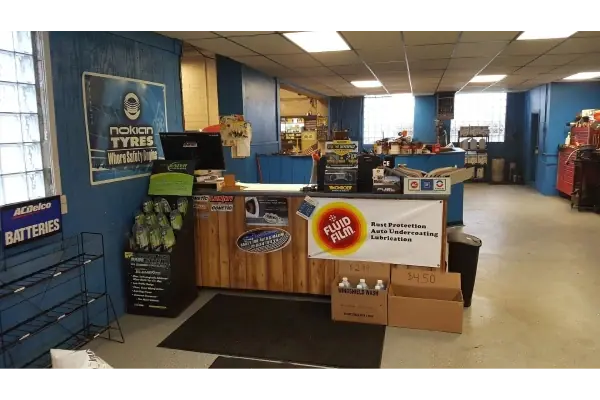
Every year around Halloween we get the same conversation at the counter. Someone's all-season tires look fine, tread's not worn down, and they figure they'll wait until the first real snowfall before they think about winter rubber. Here's the thing nobody tells them: by the time snow is on the ground, their tires have already been performing worse for weeks.
It's the temperature, not the snow
All-season tire compounds are built around a middle-of-the-road rubber formula. Above 45°F they grip fine. Below that, the compound starts to stiffen, and a stiff tire can't flex into the small imperfections in the road surface the way it needs to for real grip. This happens whether there's an inch of snow on the ground or the pavement is bone dry. A dry, cold, 38-degree evening in November is already outside the range where an all-season tire is doing its best work.
Winter tire compounds are built the opposite way. They stay pliable in the cold, which is why a winter tire on dry pavement at 30°F will out-brake an all-season tire on the same pavement. The tread pattern gets the headlines (the deep, aggressive channels that bite into snow) but the compound is doing more of the real work than people give it credit for.
So when should you actually switch
The rule of thumb that tracks the science: once overnight lows are consistently sitting near or below 45°F, get the winter tires on. In our part of Western New York that's usually mid-to-late October, well before the lake-effect bands start rolling off Erie and Ontario in earnest. Waiting until the first big snow means you've already driven a month of cold mornings on tires that were never designed for it.
The same logic runs in reverse come spring. Once you're back into consistent daytime highs above 45°F, it's time to swap back to all-seasons or summer tires. Running winter tires through a warm spring wears the softer compound down fast and costs you money for nothing, since they're not doing anything a regular tire couldn't do better once it's warm out.
What actually happens if you don't switch
- Longer stopping distances on cold, dry pavement, not just on snow or ice
- Reduced steering response in a slide-correction situation, when you need it most
- Faster wear on all-season tires used through a full Buffalo winter, since the stiff compound abrades harder against road salt and grit
- A false sense of security from tread depth alone. Tread pattern and rubber compound are two different jobs, and tread depth alone doesn't tell you which season a tire is built for
Off-season storage solves the actual hassle
The reason most people put off the switch isn't the tires, it's the logistics. Two sets of wheels and tires take up real space in a garage, and swapping them yourself twice a year gets old fast. We keep tire and wheel storage available for our Canadian customers coming across from Southern Ontario, so the off-season set sits with us instead of taking up a bay in your garage. If you're crossing the border with an Ontario driver's license, you also get 10% off any four tires when you buy here, which for a lot of our regular customers makes the trip worth the drive on its own.
If you're not sure whether your current tires are all-season or winter-rated, bring the vehicle by and we'll take a look. It's a five-minute check and it's the difference between a tire that's working with you in a Buffalo winter and one that's just along for the ride.
Bailey Tire Auto & Marine Service Inc., (716) 834-4434
Call (716) 834-4434More articles
Winterizing a Boat in Western New York: The Order of Operations That Actually Prevents Cracked Blocks
Freeze damage on a boat almost never happens because someone forgot to winterize. It happens because they winterized out of order.
What a Check Engine Light Actually Means (and What a Scan Tool Can't Tell You)
A code reader will tell you a code number. It won't tell you which of the five things that could actually mean is the one wrong with your car.