Winterizing a Boat in Western New York: The Order of Operations That Actually Prevents Cracked Blocks
Freeze damage on a boat almost never happens because someone forgot to winterize. It happens because they winterized out of order.
September 14, 2026 · 3 min read
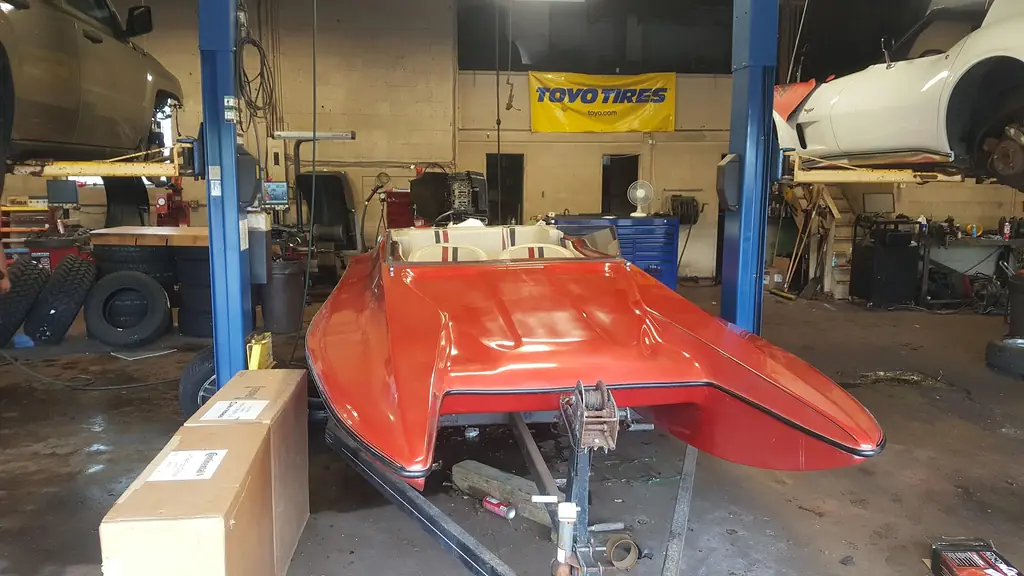
We see the same two or three boats every spring that didn't need to be here. Not because the owner skipped winterizing, but because they did the steps out of order, or skipped one that seemed optional. On a boat sitting outside through a Western New York winter, there isn't much room for a shortcut. Water that doesn't get out of a block or a hose before the first hard freeze finds the weakest point in the system and splits it.
What actually cracks over a Buffalo winter
Water expands roughly nine percent when it freezes. In a closed system like an engine block, a raw water pump, or a length of hose, that expansion has nowhere to go, so it pushes outward until something gives. The usual casualties: a block or manifold with a hairline crack that won't show until you fire it up in May and see coolant weeping from a spot that was fine last fall, a raw water pump impeller housing that splits, and hose barbs that crack right where a clamp was cinched down hard.
The scary part is that a cracked block doesn't always announce itself right away. Sometimes it seeps just enough to lose pressure under load, and you don't find it until you're twenty minutes off the dock in June. That's the outcome winterizing exists to prevent, and it's also the reason we'd rather spend an hour on it in November than an afternoon pulling a manifold in July.
The order matters more than the checklist
- Run the engine to full operating temperature before you do anything else. Cold oil and cold antifreeze don't drain or circulate the way you need them to.
- Change the oil and filter while the oil is still warm and holding contaminants in suspension, rather than letting them settle in a cold engine over winter.
- Flush the raw water system with fresh water to clear out lake sediment, then run non-toxic marine antifreeze all the way through the block, manifolds, and any heat exchanger until it's flowing pink at every exit point, not just the first one you see.
- Fog the cylinders on a carbureted or older engine to protect against internal corrosion over a long dry lay-up.
- Stabilize the fuel and run it through the system so the stabilizer reaches the carburetor or injectors, not just the tank.
- Grease the steering system, the trim tabs, and any other fitting that's exposed to moisture and could seize over winter.
- Pull the drive or lower unit and check the gear oil for the milky look that means water intrusion, which needs fixing now, not in April.
Why the order is the part people get wrong
The most common mistake we see is someone adding antifreeze to a cold engine without running it first, which means the antifreeze never actually displaces all the water sitting in the block. It looks winterized. It isn't. The second most common mistake is skipping the raw water flush and going straight to antifreeze, which pushes antifreeze on top of lake sediment and doesn't actually protect the passages that sediment is blocking.
Why spring rebuild slots fill early
Every spring we get calls in April from owners who want the boat back in the water for a weekend that's already three weeks away, and a rebuild or a real repair doesn't work on that timeline. Parts for marine engines, especially anything older or a less common brand, can take longer to source than most people expect, and the shops doing this work in Western New York get booked solid the moment the ice starts breaking up on the lake. If a boat needs real engine work, winter is actually the better time to have that conversation, not spring.
We handle marine repairs and high-performance engine builds for both cars and boats right here in the same shop, which is a fairly unusual combination for a Buffalo repair shop to offer. If your boat needs winterizing done right, or you already know it needs work before it sees the water again, get on the schedule now rather than in April when everyone else has the same idea.
Bailey Tire Auto & Marine Service Inc., (716) 834-4434
Call (716) 834-4434More articles
When to Switch to Winter Tires in Buffalo (It's the Temperature, Not the Snow)
Most drivers wait for snow on the ground before they think about winter tires. By then the rubber in your all-seasons has already gone stiff on you for a month.
What a Check Engine Light Actually Means (and What a Scan Tool Can't Tell You)
A code reader will tell you a code number. It won't tell you which of the five things that could actually mean is the one wrong with your car.